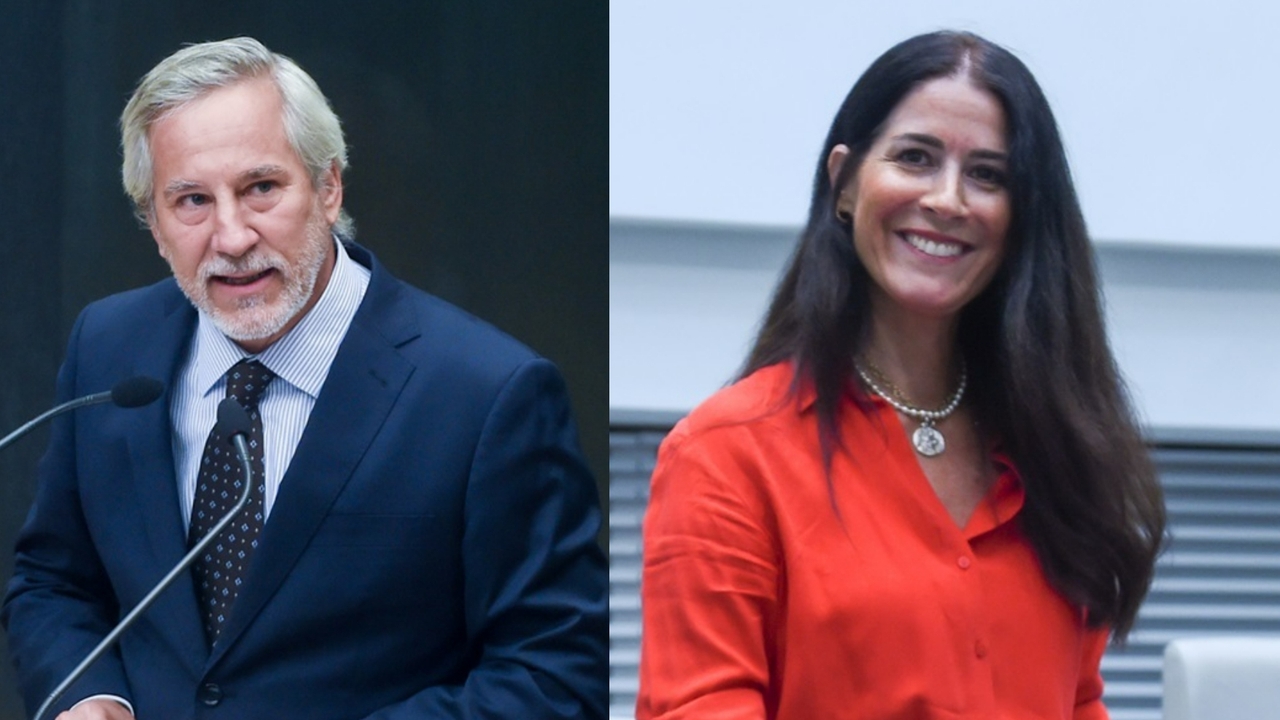
Vox's Madrid Crisis Deepens: Toscano and Ansaldo Suspended Amidst Expulsion Furore
The political landscape in Madrid, and indeed across Spain, is currently observing an intensifying drama within the ultraconservative Vox party. What began as a high-profile expulsion of Javier Ortega Smith, the party's leader in the Madrid City Council, has rapidly escalated. In a move that signals a profound deepening of its internal crisis, Vox's general secretariat has now announced the provisional suspension of two more prominent figures: Carla Toscano, the deputy spokesperson in Cibeles, and councilor Ignacio Ansaldo. These latest suspensions, just days after Ortega Smith's ousting, underscore a brutal power struggle that threatens to fracture the party from within, leaving many wondering about the future direction of Santiago Abascal's political project.
The term concejales Vox expulsados, or "expelled Vox councilors," has become a grim reality for an increasing number of party members, highlighting a growing schism between the party's executive and its local representatives in the capital. This ongoing internal purge raises serious questions about democratic processes within the party and the limits of dissent among its ranks.
The Latest Expulsions: Toscano and Ansaldo Join the Ranks
The formal communication, issued by Vox's general secretariat under Ignacio Garriga, was sent to the Madrid City Council, mirroring the procedure followed for Ortega Smith. This swift action confirms the opening of expulsion proceedings against both Toscano and Ansaldo, effective immediately as a precautionary measure. The decision to suspend them cautelarly (provisionally) means they are stripped of their party affiliation and privileges while their cases are reviewed, effectively silencing their voice within official party structures.
The significance of these latest suspensions cannot be overstated. Ignacio Ansaldo holds the distinction of possessing Vox's membership card number one (carné 001), identifying him as a founding member of the party. Ortega Smith himself revealed this detail, noting his own card number as 006, in a press conference aimed at discrediting suggestions that he was not among the party's co-founders. The removal of such foundational figures speaks volumes about the current executive's willingness to sideline even those most deeply ingrained in Vox's origins, indicating a resolve to consolidate power at any cost.
Carla Toscano, a vocal and often controversial figure, served as the deputy spokesperson for the municipal group in Madrid. Her suspension, alongside Ansaldo's, directly follows the directives from the party's central leadership, further isolating Ortega Smith and those perceived as loyal to him. The speed and decisiveness of these actions suggest a calculated move by the party's executive to reassert control and eliminate internal opposition.
A Web of Allegations: Why Were They Suspended?
The core of the dispute appears to revolve around loyalty and adherence to party directives. According to sources and public statements, Toscano and Ansaldo's suspensions stem from their refusal to support the removal of Javier Ortega Smith as the municipal group's spokesperson. This act of defiance has been interpreted by the party leadership as a direct challenge to their authority, leading to swift disciplinary action.
Carla Toscano responded with powerful conviction to her suspension, articulating her stance in a message published on X (formerly Twitter). She declared, "We are being led into an absurd situation. I have been suspended and disqualified for not accepting an impossible situation: to support the unjust and illegal dismissal of my colleague as spokesperson of the Vox Municipal Group in the Madrid City Council." Her statement underscores a principled refusal to comply with what she perceives as instructions that violate democratic norms and arbitrarily attack an innocent person who has dedicated himself to the party. Toscano's defiant message highlighted a profound ethical dilemma: "I would not respect myself and would deserve general contempt if, to maintain my position, I betrayed my conscience and became an accomplice to an injustice."
For a deeper dive into her perspective, read Carla Toscano Slams Vox Expulsion: "Unjust and Illegal Orders".
Ortega Smith, for his part, has vowed to fight his expulsion through all available channels, including ordinary courts, declaring his "honorability is not for sale." He accused the party, led by Santiago Abascal, of fabricating "lies" as "excuses" to remove him and of engaging in a "dirty war" through a "repugnant defamation" strategy. This paints a picture of a deeply personal and acrimonious battle, far removed from standard political disagreements.
The situation highlights a critical issue within political parties: the balance between party discipline and individual conscience. While parties need cohesion to function effectively, the suppression of internal dissent, especially on grounds perceived as unjust or illegal by those involved, can lead to severe internal fracturing and reputational damage.
Vox's Internal Turmoil: More Than Just Madrid
This crisis in Madrid is not merely a local skirmish; it's a symptom of deeper structural challenges within Vox. The expulsion of foundational members and outspoken critics like Ortega Smith, Toscano, and Ansaldo suggests a party leadership intent on purging any perceived disloyalty or independent thought. Such purges, while aiming to centralize power, often come at the cost of alienating party veterans and dedicated activists, potentially weakening the party's grassroots support and ideological diversity.
The spectacle of concejales Vox expulsados, particularly those with deep historical ties to the party, can erode public trust and project an image of instability and internal authoritarianism. For a party that prides itself on strong leadership and a united front, these public squabbles are damaging. They offer ammunition to political rivals and raise questions among voters about the party's internal democratic health.
Fact: The expulsion of founding members like Ignacio Ansaldo (carné 001) is particularly notable in political party history. It signifies a profound break with the party's origins and suggests a complete restructuring of its internal power dynamics, often leading to a crisis of identity for the organization.
This internal turmoil can also distract from the party's broader political agenda, forcing its leaders to expend energy on internal damage control rather than focusing on national issues or electoral campaigns. The Madrid crisis, therefore, could have repercussions far beyond the capital, influencing Vox's performance in future regional and national elections.
For more on the implications for the party's foundations, consider Vox's Internal Battle: Founders Expelled in Madrid Fallout.
The Path Forward: Legal Battles and Political Fallout
Javier Ortega Smith's pledge to pursue legal action against his expulsion suggests that this saga is far from over. The involvement of ordinary courts could drag the party into protracted and costly legal battles, further exposing its internal divisions to public scrutiny. Such legal challenges could set precedents for how political parties in Spain handle internal dissent and expulsions, particularly when allegations of "unjust and illegal orders" are made.
For the Madrid Municipal Group of Vox, the immediate consequence is a significant shake-up in its composition and leadership. With key figures suspended or expelled, the group faces a period of instability, potentially impacting its effectiveness in city council proceedings and its ability to present a cohesive opposition. The remaining councilors will be under immense pressure to align with the central party line, potentially stifling internal debate and reducing the group's overall dynamism.
Practical Tip: In situations of intense party conflict, internal arbitration or mediation mechanisms are often crucial. When these fail or are perceived as illegitimate, as seems to be the case here, the dispute invariably spills into the public domain and potentially the legal system, with detrimental effects for all parties involved.
Looking ahead, the fallout from this crisis could influence Vox's electoral strategy and alliances. A party embroiled in internal strife may find it harder to project an image of strength and unity, which are often key attractors for its voter base. This could also complicate potential coalition negotiations with other conservative parties, as internal instability can make a party a less reliable partner.
Conclusion
The provisional suspension of Carla Toscano and Ignacio Ansaldo marks another critical turning point in Vox's deepening Madrid crisis. Far from resolving the internal dissent triggered by Ortega Smith's expulsion, these latest moves suggest a party executive determined to enforce unwavering loyalty, even at the expense of its founding members and the democratic principles its critics claim it has abandoned. As the list of concejales Vox expulsados grows, the party faces a pivotal moment: will it emerge stronger and more unified, or will this internal battle fundamentally alter its character and standing in Spanish politics? Only time, and the outcomes of impending legal and political skirmishes, will tell.